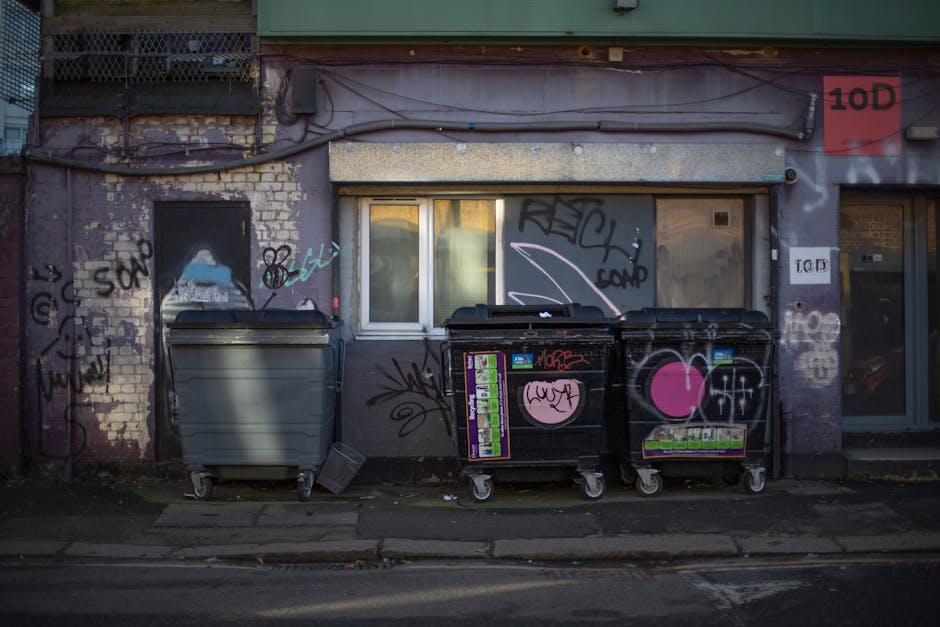
Tooting rubbish removal guide for Tooting Broadway residents
If you live in Tooting Broadway, rubbish builds up faster than people expect. A bit of DIY, a flat move, a garden tidy, or a new sofa arriving on a rainy Tuesday can leave you with bags, broken bits, and bulky waste that suddenly feels like a bigger job than it should. This Tooting rubbish removal guide for Tooting Broadway residents is here to make the process simpler, safer, and less stressful.
You will find practical advice on what rubbish removal actually involves, how to choose the right approach, what to watch out for, and how to avoid the usual headaches. Truth be told, most people just want the stuff gone without making a mess of the hallway or spending all weekend at the tip. Fair enough.
Whether you are clearing a cramped flat, dealing with renovation debris, or shifting old furniture from a family home, the right plan makes a big difference. And in a busy part of South West London, that extra bit of planning can save you time, money, and a lot of back-and-forth.
Contents
- Why rubbish removal matters in Tooting Broadway
- How rubbish removal works
- Key benefits and practical advantages
- Who this is for and when it makes sense
- Step-by-step guidance
- Expert tips for better results
- Common mistakes to avoid
- Tools, resources and recommendations
- Law, compliance, standards, and best practice
- Options, methods, and comparison table
- Case study or real-world example
- Practical checklist
- Conclusion
- Frequently asked questions
Why Tooting rubbish removal guide for Tooting Broadway residents Matters
Rubbish removal sounds simple until you are the one doing it. Then you notice the narrow stairwell, the lack of lift, the awkward parking, the wet carpet from a bag that split on the way downstairs. Typical, really.
For Tooting Broadway residents, the issue is often not just volume. It is access, timing, and the mix of items that need to go. One pile might include cardboard, damaged furniture, old clothes, and a couple of things you are not sure how to dispose of safely. That mix is where people get stuck.
Getting rid of waste properly matters because it affects:
- how quickly your space becomes usable again
- how safely bulky or heavy items are handled
- whether recyclable materials are separated sensibly
- how much stress you create for yourself and your neighbours
There is also the local practical side. In a busy residential area, leaving waste outside for too long is rarely a good idea. It can block shared paths, attract attention, and create awkward conversations with neighbours. Nobody wants that, to be fair.
If your waste is mixed, heavy, or time-sensitive, a structured removal plan is usually better than trying to do it piecemeal. That is especially true for flats, homes with limited storage, and anyone already juggling work, children, or a renovation schedule.
How Tooting rubbish removal guide for Tooting Broadway residents Works
At a practical level, rubbish removal means collecting unwanted items, loading them safely, transporting them away, and disposing of them in an appropriate way. The details vary depending on what you have, how much there is, and where it is located.
Most removals follow a fairly similar pattern:
- You identify the items that need clearing.
- You separate anything that should stay, be donated, or be recycled.
- You decide whether the job is small enough for a single load or larger and more complex.
- You arrange a collection window that fits around access and parking.
- The waste is removed and taken to the appropriate facility or processing route.
What changes the experience most is the type of waste. A few bags of general rubbish are very different from builders' rubble, garage clutter, old mattresses, or a full flat clearance. If you need a broader household solution, services such as home clearance or house clearance are usually a better fit than trying to treat everything as loose rubbish.
For furniture-heavy jobs, it can also make sense to look at furniture clearance or furniture disposal. That is especially helpful when the main issue is volume, bulk, and awkward carrying rather than a huge pile of mixed waste.
There is a small but important distinction here: rubbish removal is about getting waste off-site responsibly, not just making it disappear. The best providers work with sorting, transport, and disposal in mind. That matters more than people sometimes think.
Key Benefits and Practical Advantages
Good rubbish removal is not only about convenience. It can make your whole home feel lighter. You open the door and there is suddenly space to breathe again. Sounds dramatic, maybe, but anyone who has lived with a pile of waste in the corner knows the feeling.
Here are the main benefits residents usually notice:
- Faster clear-up: what might take you several trips can often be done in one organised visit.
- Less physical strain: heavy lifting, awkward bends, and repeated carrying are reduced.
- Better organisation: you can sort what stays, what goes, and what can be recycled more clearly.
- Cleaner living space: you remove clutter before it starts to feel like the room is shrinking.
- More reliable disposal: mixed waste can be handled properly instead of being dumped into the wrong bin stream.
Another benefit that gets overlooked is peace of mind. When you know the waste will be handled correctly, you spend less time wondering whether you are doing the right thing. That is especially useful if you are clearing after tenants, dealing with an estate, or finishing a renovation.
For some households, the key advantage is simply reclaiming usable space. A garage packed with old boxes, a loft full of forgotten items, or a hallway clogged with furniture can create low-level daily frustration. You stop noticing it at first, then one day you realise the clutter is affecting how the whole place feels.
If your project also involves outdoor waste, a dedicated garden clearance can be more efficient than lumping everything together. Likewise, home offices, shared workspaces, or rented premises may need office clearance or even business waste removal if the waste is commercial rather than domestic.
Who This Is For and When It Makes Sense
This guide is useful for a surprisingly wide range of Tooting Broadway residents. If you are wondering whether your situation counts, the short answer is probably yes if the waste is too much for normal bins or too awkward for a simple DIY run.
It tends to make most sense for:
- flat residents with limited storage and difficult stair access
- families clearing out after a move or renovation
- landlords preparing a property between tenancies
- homeowners dealing with loft, garage, or shed clutter
- people replacing large furniture items
- small businesses with office or stockroom waste
- DIYers and tradespeople with mixed builders' waste
If you are in a flat with shared corridors, timing matters more than people expect. A single bulky item sitting in the wrong place can be a nuisance for everyone. That is where something like flat clearance becomes a practical solution instead of a luxury.
For DIY and renovation jobs, you may need builders waste clearance. That is usually the right direction if you are dealing with broken plasterboard, timber offcuts, tiles, packaging, or old fixtures. Not glamorous, but very common.
And if the issue is simply a room that has become a storage zone for everything life has thrown at you over the last ten years, garage or loft clearance can be the smarter starting point. People often say, "It's only a few bits." Then you open the door and, well, it is not a few bits.
Step-by-Step Guidance
Here is the most reliable way to handle rubbish removal without creating extra work for yourself.
1. Sort the waste into clear groups
Start by separating general rubbish, recyclable materials, furniture, garden waste, and any items that need special handling. You do not need military precision. Just enough order to avoid mixing everything together.
2. Identify anything that should stay
This sounds obvious, but it is where mistakes happen. Check cupboards, loft corners, and under-bed storage before you bag everything up. A surprising number of "throwaway" piles contain one important envelope or a charger somebody actually still uses.
3. Measure the scale of the job
Ask yourself a few basic questions: Is this one room or the whole property? Are there stairs? Are the items bulky or fragile? The answers help you choose between a small collection and a more complete clearance service.
4. Plan access and parking
In Tooting Broadway, access is often the real challenge. Make sure the route from the property to the collection point is clear. If parking is tight, think ahead. A straightforward waste job can become frustrating fast if the vehicle cannot get close enough.
5. Keep dangerous or awkward items separate
Certain materials need extra care. Sharp metal, broken glass, heavy rubble, and anything oily or chemically messy should not be handled casually. If you are unsure, do not shove it into a random black bag and hope for the best. That rarely ends well.
6. Choose the right service type
If you only need one appliance or sofa removed, a focused collection may be enough. If the waste spans several rooms, a broader service is usually better. The right choice can prevent repeat visits and extra disruption.
7. Confirm disposal and recycling expectations
It is sensible to ask how items will be processed. Reuse, recycling, and proper disposal should be part of the conversation from the start. A good provider will be clear about this and should not make the answer feel vague.
8. Check the space afterwards
Once the waste is gone, take a few minutes to look around properly. Sometimes one corner still holds loose packaging or a forgotten bag. A quick final sweep saves annoyance later. It really does.
Expert Tips for Better Results
In our experience, the smoothest rubbish removal jobs are the ones that are boringly well prepared. No drama. No last-minute panic. Just a few sensible decisions made before the collection starts.
- Photograph the waste pile first: it helps you remember what is included and avoids confusion later.
- Separate reusable items early: if something can be passed on or reused, keep it out of the waste stream.
- Flatten cardboard and lighter packaging: this creates more workable space and makes loading easier.
- Keep a "maybe" box: anything uncertain goes there, not straight into the rubbish pile.
- Use heavier bags sparingly: overfilled bags split at the worst possible moment. Usually on stairs. Naturally.
Here is one practical tip people underestimate: label the piles. Even a quick note like "keep," "recycle," and "remove" can cut the decision fatigue in half. When you are midway through a clear-out and running on tea and determination, that matters.
If the work includes stored belongings as well as rubbish, a planned loft clearance or garage clearance can help you avoid the common trap of shifting waste from one corner to another without actually solving the problem.
Another small but useful point: keep a bag for dust and small debris. Once the large items are gone, tiny fragments always seem to appear. A floor brush helps, but a final hand sweep in the corners can be oddly satisfying. Slightly grim, yes, but satisfying.
Common Mistakes to Avoid
Most rubbish removal mistakes are avoidable. The trouble is, they are also easy to make when you are in a hurry.
- Mixing everything together: recycling becomes harder, and sorting takes longer.
- Underestimating weight: heavy bags are harder to carry and more likely to split.
- Forgetting access constraints: narrow stairs and parking restrictions can change the job completely.
- Leaving it to the last minute: tight deadlines lead to rushed decisions and more stress.
- Assuming all waste is the same: garden waste, furniture, builders' debris, and general rubbish are not always handled in the same way.
- Not checking what can be recycled: recyclable material mixed with general waste is a missed opportunity.
One of the sneakiest mistakes is ignoring the clean-up after the collection. People focus so much on what is being removed that they forget about the little debris left behind: screws, splinters, packaging ties, and the odd bit of dust. It is not a disaster, just annoying. And avoidable.
Another common issue is booking the wrong type of clearance for the job. A single old wardrobe does not need the same approach as a full property clearance, but a messy conversion project may need more than a standard waste load. Picking the right service from the start usually saves a second round of effort.
Tools, Resources and Recommendations
You do not need an arsenal of equipment to manage rubbish removal, but a few basic tools make the work far easier.
- strong bin bags or rubble sacks for lightweight waste
- gloves for handling rough, dusty, or sharp materials
- a trolley or sack truck for bulky items where suitable
- packing tape and labels for sorting and sealing bags
- a dustpan and brush for the final tidy-up
- a torch for lofts, cupboards, and storage corners
For larger jobs, the most useful "resource" is usually planning. A simple room-by-room list can be more helpful than guessing. If you are clearing a home that has accumulated clutter over years, a home clearance plan often works best when you break it into zones rather than trying to conquer the whole property in one go.
If you are dealing with old tables, wardrobes, beds, or mixed household items, furniture-focused services are often the most efficient route. That is where furniture disposal can be a cleaner fit than a general skip-it-all approach.
It is also worth looking at the company's wider standards, not just the job on the day. Pages such as recycling and sustainability, insurance and safety, and health and safety policy can give you a better sense of how the work is approached. That kind of reassurance matters, especially for higher-value or more complex clearances.
Law, Compliance, Standards, and Best Practice
Waste removal in the UK sits within a framework of legal duties and everyday best practice. You do not need to become a compliance expert, but you should know the basics. After all, waste has to end up somewhere, and "somewhere" should be legitimate.
For residents, the main practical points are straightforward:
- Do not leave waste where it causes obstruction or nuisance.
- Keep hazardous or potentially harmful items separate from general waste.
- Use a provider that can explain how waste will be handled.
- Be cautious about anyone offering unrealistically cheap removal without clear detail.
From a best-practice perspective, responsible waste handling usually means sorting items properly, prioritising reuse or recycling where possible, and ensuring the load is transferred to the right channel for disposal. That might sound obvious, but clarity here protects you from sloppy work later.
If you are arranging removal for a rented property, a business premises, or a move-out situation, keep records of what was collected and when. It is a small habit, but it can help if questions come up afterwards. A tidy paper trail saves awkwardness.
For commercial settings, it may be more appropriate to use business waste removal or office clearance. That is often the safer and more organised option where desks, files, packaging, and IT items are involved.
Best practice also extends to payment clarity and service terms. Before booking, review pricing and quotes and terms and conditions so you know what is included. That way, there are fewer surprises, which is always a good thing.
Options, Methods, or Comparison Table
There is no single right way to clear rubbish. The best method depends on what you are removing, how much time you have, and how much lifting you are willing to do yourself. Here is a simple comparison.
| Method | Best for | Pros | Limitations |
|---|---|---|---|
| Self-clearing in small loads | A few bags or light household waste | Low cost, flexible timing | Time-consuming, physically tiring, not ideal for bulky items |
| Focused item removal | One or two large objects like a sofa or mattress | Quick, simple, less effort | Not suitable for mixed or multi-room waste |
| Room-by-room clearance | Lofts, garages, flats, or living spaces with clutter | Good balance of speed and organisation | Needs planning and access preparation |
| Full property clearance | Moves, bereavement clearances, major decluttering | Most comprehensive, least stress | Can feel like a bigger commitment |
If you are on the fence, start with the size of the mess, not the price tag. The cheapest option is not always the most economical if it forces you into several extra trips or leaves half the waste behind.
In practical terms, many Tooting Broadway residents find that smaller jobs are manageable with a little DIY, while mixed or bulky waste quickly tips into professional clearance territory. That is not a failure. It is just a realistic read on the job.
Case Study or Real-World Example
Here is a realistic scenario that comes up quite often.
A couple in a Tooting Broadway flat decides to refresh their living room and clear the storage cupboard at the same time. What starts as "just some old bits" turns into a sofa, two chairs, broken shelving, packaging from new furniture, several bags of household clutter, and a dusty box of cables nobody recognises. The hallway is narrow. There is shared access. The lift is, let's say, temperamental.
They begin by sorting the items into keep, recycle, and remove. That alone cuts the pile down more than they expected. Then they measure the larger furniture and make space by moving smaller items into one corner. They book the right type of clearance rather than trying to force everything into a standard rubbish run.
On the day, the route is clear, the items are ready, and the job moves quickly. The biggest relief is not just seeing the waste go. It is walking back into a room that feels usable again. Less clutter, less dust, less mental noise. That last part is real, by the way.
This kind of job is why many residents prefer structured services over a series of small DIY trips. The issue is not effort alone. It is the accumulation of effort across a week, a busy schedule, and a few awkward objects that do not fit nicely into everyday life.
Practical Checklist
Use this checklist before any rubbish removal job in Tooting Broadway.
- Identify exactly what needs removing.
- Separate items to keep, recycle, donate, or discard.
- Check whether anything is heavy, sharp, or awkward.
- Measure bulky items before collection day.
- Clear access routes, hallways, and doorways.
- Think about parking or vehicle access.
- Group waste by type where possible.
- Remove personal items from drawers, cupboards, and pockets.
- Confirm any special handling needs in advance.
- Do a final sweep for loose debris after collection.
Quick rule of thumb: if you would hesitate to carry it down stairs yourself, treat it as a planned removal job rather than an ordinary bin task.
And if you are clearing several areas at once, split the work into stages. It is calmer, safer, and honestly a lot less annoying.
Get a free quote today and see how much you can save.
Conclusion
A good rubbish removal plan does more than empty a room. It gives you control back. That is the real value for many Tooting Broadway residents. When the waste is sorted properly, the access is planned, and the right clearance approach is chosen, the whole process becomes much easier to manage.
Whether you are dealing with a few bulky items, a cluttered loft, or a full household clear-out, the smartest move is usually the same: sort early, plan access, and choose a service that matches the job rather than forcing the job to fit the service. Simple idea. Big difference.
If you are ready to move from "I should sort that out" to actually getting it done, take the next step with confidence. A cleaner space has a habit of making everything feel a bit lighter, and that is no bad thing.
Frequently Asked Questions
What counts as rubbish removal for Tooting Broadway residents?
It usually includes collection and disposal of general household waste, bulky items, furniture, mixed clutter, and other unwanted materials that are too much for normal bins. The exact approach depends on the type and volume of waste.
Is rubbish removal different from house clearance?
Yes. Rubbish removal often focuses on waste and unwanted items, while house clearance usually covers a broader clear-out of rooms or entire properties. If you are clearing multiple rooms or a full home, house clearance is often the better fit.
What should I do before the collection day?
Sort the items, remove anything you want to keep, make access routes clear, and separate any awkward or heavy pieces. A few minutes of prep can save a lot of time later.
Can furniture be removed as part of rubbish clearance?
Often yes, but it is sensible to use a furniture-focused service when the main issue is sofas, beds, wardrobes, or similar bulky items. That usually makes the job cleaner and more efficient.
How do I know whether I need flat clearance?
If you live in a flat with shared access, limited storage, or awkward stairs, and you need more than a simple bag collection, flat clearance is often the most practical option.
What if my rubbish includes garden waste or builders' debris?
Mixed waste can often be handled, but it is best to mention it in advance. Garden waste and builders' waste may need a more suitable clearance approach than standard household rubbish.
How can I reduce the cost of rubbish removal?
Sort the waste before collection, keep recyclable items separate, and avoid mixing things that need different handling. Clear access also helps, because the job becomes quicker and easier to complete.
Is it worth using a professional service for a small amount of waste?
If the waste is light and easy to move, you may manage it yourself. But if it is bulky, time-sensitive, or difficult to carry, a professional service can save you a lot of hassle.
What should I ask before booking a waste collection?
Ask what is included, how the waste will be handled, whether there are any access requirements, and how pricing works. Reviewing pricing and quotes and terms and conditions can help you feel clear before you commit.
Can I mix different kinds of waste together?
Sometimes, but it is usually better not to. Separating waste makes recycling easier and can help the removal process run more smoothly. When in doubt, sort by type first.
What if I only need help with one heavy item?
Then a focused item removal may be enough. For example, a single sofa, mattress, or cabinet does not usually need a full clearance service.
How do I choose a trustworthy rubbish removal provider?
Look for clear communication, sensible pricing, insurance and safety information, and a straightforward explanation of how waste is handled. Pages like about us and insurance and safety can help you understand the service better.
What is the best next step if I am still unsure?
Start by listing the items you want removed and estimating how much space they take up. Then compare that with the most relevant service type. If the job is larger than it first looks, that is completely normal. It happens all the time.